
What was approved
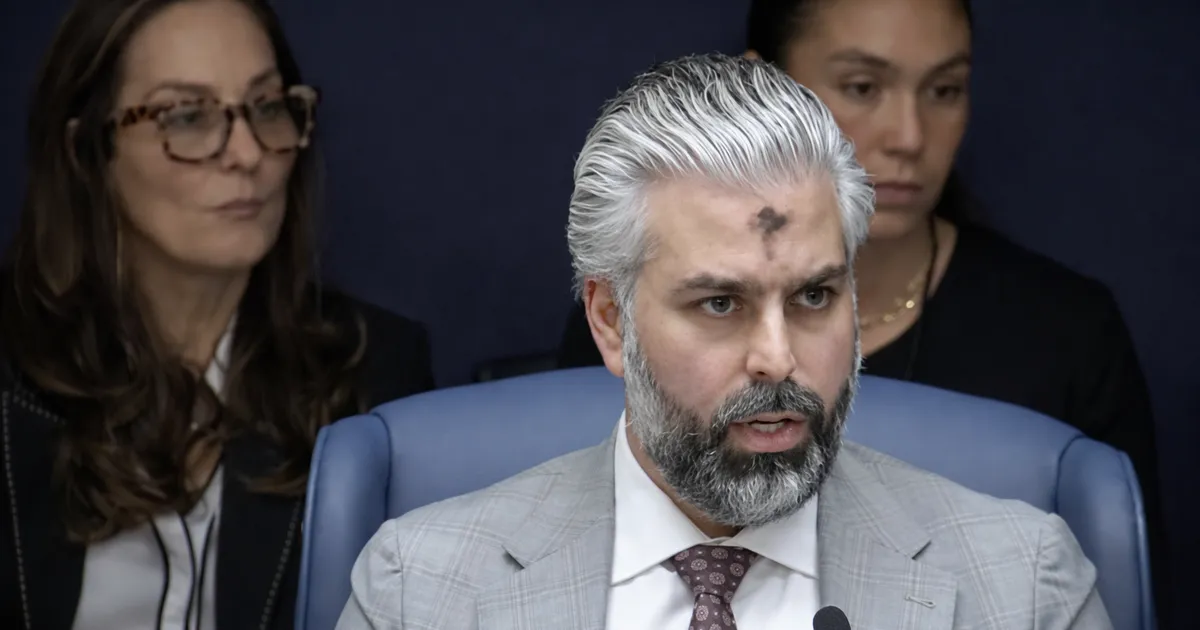
The motion, presented by Commission President Anthony Rodríguez, instructs the administration to negotiate and finalize the so-called “interim agreement” with the FPL–FCC consortium and return it to the plenary session no later than April 20, 2026 for a vote.
The second component of the motion sets county policy, establishing that “in no case” will the county, its taxpayers or its users pay the consortium – or any other entity – continuous, future or perpetual payments of associated fees – royalties – for purchasing, leasing, using or acquiring interests in private land for the future plant.
In practice, Rodríguez sought to shield the County against land purchase structures that include recurring charges that are transferred to the garbage fee that the resident ends up paying out of pocket.
Royalty: the red line
Rodríguez recalled that the matter was raised in the workshop on February 12, 2026, organized so that the commissioners were aware and in some way established the conditions of the negotiation between the administration and the consortium.
Both the land purchase proposal presented by FPL and FCC to build the plant include the payment of a royalty in perpetuity, in addition to the sale price. The president’s message was direct, the Commission would not accept the County acquiring private land with a “royalty” in perpetuity. “It is disrespectful and insulting to the taxpayers of this county to link the sale to a perpetual royalty,” Rodríguez said at the workshop and was supported by his colleagues.
Another tense moment at the February 18 meeting was when the administration, through Roy Cooley, the county’s director of public and regulatory services, insisted that it should first select the land and then move forward with engineering and geotechnical studies.
Rodríguez objected because, in the workshop, the consortium had conveyed that it could continue working, even if the land was not chosen that day.
The price of land
Commissioner Danielle Cohen Higgins took the discussion to concrete numbers, and it became clear why “royalty” became the main obstacle. Site A, linked to FPL, has 65 acres and is priced at one million per acre, which equates to $65 million as a purchase basis before closing costs.
Additionally, the option agreement includes an additional annual royalty charge that would begin when the plant comes into operation and would escalate each year based on inflation. A component that the resident ends up paying.
Site B, proposed by FCC, was described as having a size of about 77 with the potential for an additional 10 acres. The price was also set at one million dollars per acre, which places the base cost in the approximate range of 77 million, or more if the extension is completed. As an alternative to the scalable “royalty”, FCC proposed a “fixed” payment of three million per year for the duration of the contract, without escalation. In the discussion it was pointed out as a charge of a similar nature to the royaltydue to its recurring nature.
Rodríguez warned that the simple acquisition cost could approach the range of 100 million depending on the final scope of the waste “campus”, and several commissioners openly proposed that the County should take a second look at its own land to prevent the price of the land from becoming a permanent burden for the taxpayer.
Cost menu
On the floor, Commissioner Oliver G. Gilbert, III stated that the County needs a transparent “a la carte” breakdown of the cost of the waste-to-energy plant. Where you can see how much it would cost to add each component, from sludge management to options such as composting or complementary systems. In his opinion, asking for more features and demanding specific costs are not contradictory ideas, the key is to know what each decision pays for.
Gilbert took the debate to the fiscal field and recalled that the waste service is managed as a fund of the owner, where “the rate must pay for the service.” He cautioned that the County can’t approve an expensive facility and then shy away from the impact on the trash rate. He summarized that tension with a metaphor: the County cannot expect to “buy a Bentley by paying for a Corolla.”
Definitions and guarantees
The February 12 workshop was the key prelude to the motion of the 18th. Commissioner Danielle Cohen Higgins made it clear that any decision must revolve around the interest of the taxpayer and not the convenience of the developers. He questioned whether the County is considering acquiring private land of more than 65 or 77 acres when the technical discussion itself indicates that the plant would require around 30 acres, and warned that adding recurring payments or unclear financial structures would end up being reflected in the rate residents pay.
For Cohen Higgins, the priority is to build an efficient facility, sized to the county’s real needs and with transparent costs. Along these lines, he demanded that the memorandum of understanding (MOU) between FPL and FCC precisely establish the roles of each company, the scope of the project, the financial parameters and the work schedule, so that the Commission can evaluate with verifiable data whether the proposal protects the taxpayer’s pocket, before assuming any commitment.
time is money
After the meeting, Commissioner Roberto González, consulted by Las Americas Newspaperdescribed the moment as a point of political exhaustion. He said that the most serious thing is the lack of progress and asked the “two entities” to return with “the exact numbers” for all possibilities. “One option “Ferrari” and another “Toyota”, alluding to Gilbert’s metaphor of the “Corolla”.
González emphasized that the longer the County delays, the more taxpayer money has to be sacrificed, and maintained that it is a decision that should have been made “five years ago.”
The District 11 commissioner applauded the fact that paying in perpetuity to any entity has been taken off the table, but insisted that the next inevitable step is to choose land, preferably owned by the county, because if private land is chosen, that cost will end up being paid by the resident.
He also disputed the argument that the project would be privately financed. In his opinion, whether with corporate or bank financing, the cost ends up being reflected in what the taxpayer pays. For this reason, it is requested to compare the financing options.
In his reading, the lack of clear direction or leadership on the choice of site has been the biggest deterrent. “The conversation is in vain” if the land is not defined, he summarized, while asking that, between now and April, the administration comply with an identified land, because “every day that passes, more money is lost” and in Miami-Dade one cannot continue “playing with the residents’ pockets.”
Three years without decision and without incinerator
The debate comes after three years of failed attempts by the county to close a definitive route for waste management. The urgency has increased since the Doral incinerator stopped operating after catching fire in February 2023, leaving Miami-Dade without its main solid waste plant.
Locations to rebuild or relocate the facility have been evaluated in that period — including Doral, Medley and the former Opa-locka airport — but all have been largely ruled out due to opposition from nearby communities. Rodríguez, who assumed the presidency of the Commission approximately a year ago, made the issue a priority and sought to impose a calendar with a certain date.
FPL–FCC Consortium
During the presentation to the Commission, representatives of the FPL–FCC consortium outlined what they described as a “sustainable waste campus,” a facility that would combine trash-to-energy with diversion programs under the “zero waste” model.
As explained by one of the consortium’s spokespersons in the plenary session, the plant would have the capacity to process between 1.4 and 1.9 million tons annually, and the combustion component would handle up to 37% of the waste managed by the county, leaving 63% for recycling, composting or reuse. The figure is part of a system where Miami-Dade generates approximately five million tons of waste per year, considering the total flow of the territory.
The consortium also detailed that the project would include a “single stream” recycling facility with a capacity of 40 tons per hour, equivalent to 140,000 tons per year, as well as a plant for handling construction and demolition debris with a similar capacity. Regarding the timeline, the representative indicated that the permitting process and the start of construction could be located around 2029, with an estimated entry into operation for 2034, which would force the county to maintain temporary garbage disposal solutions during the transition.
Commissioner Natalie Mialian Orbis explained that the importance of the consortium between FPL and FCC is to maximize efficiency. “Each company is an expert in different areas, uniting them will bring us better results.” However, he clarified that, if it does not work economically, we have the option of separating the proposals.
Next step
District 12 Commissioner Juan Carlos Bermúdez agreed with several of his colleagues that there is no political appetite to accept perpetual payments to private property owners, as that would make the service more expensive for Miami-Dade residents. Looking ahead to the future agenda, he outlined three priorities: first, that the facility not be located near residential areas anywhere in the county; second, that the final cost is the determining factor for the vote of many commissioners; and third, explore whether there is a cheaper alternative to develop the project valued in millions of dollars. Bermúdez said he was open to evaluating a smaller piece of land, around 30 acres, anywhere in the county, even outside his own district, and stressed that the commissioners represent all of Miami-Dade and not just their particular areas.
With the motion already approved last Wednesday, the critical point will be whether the administration can return before April 20, 2026 with a provisional agreement that keeps the schedule alive, and creates a route to a site, without committing the County to perpetual “royalties”, as required by the policy established by the Commission.
The administration insists that the selection of the land is the first step to not “waste” money on studies, while Rodríguez and several commissioners push to keep the process moving, with a clear rule: pay the fair value for the land, without being tied to recurring charges for decades.
(email protected)
